
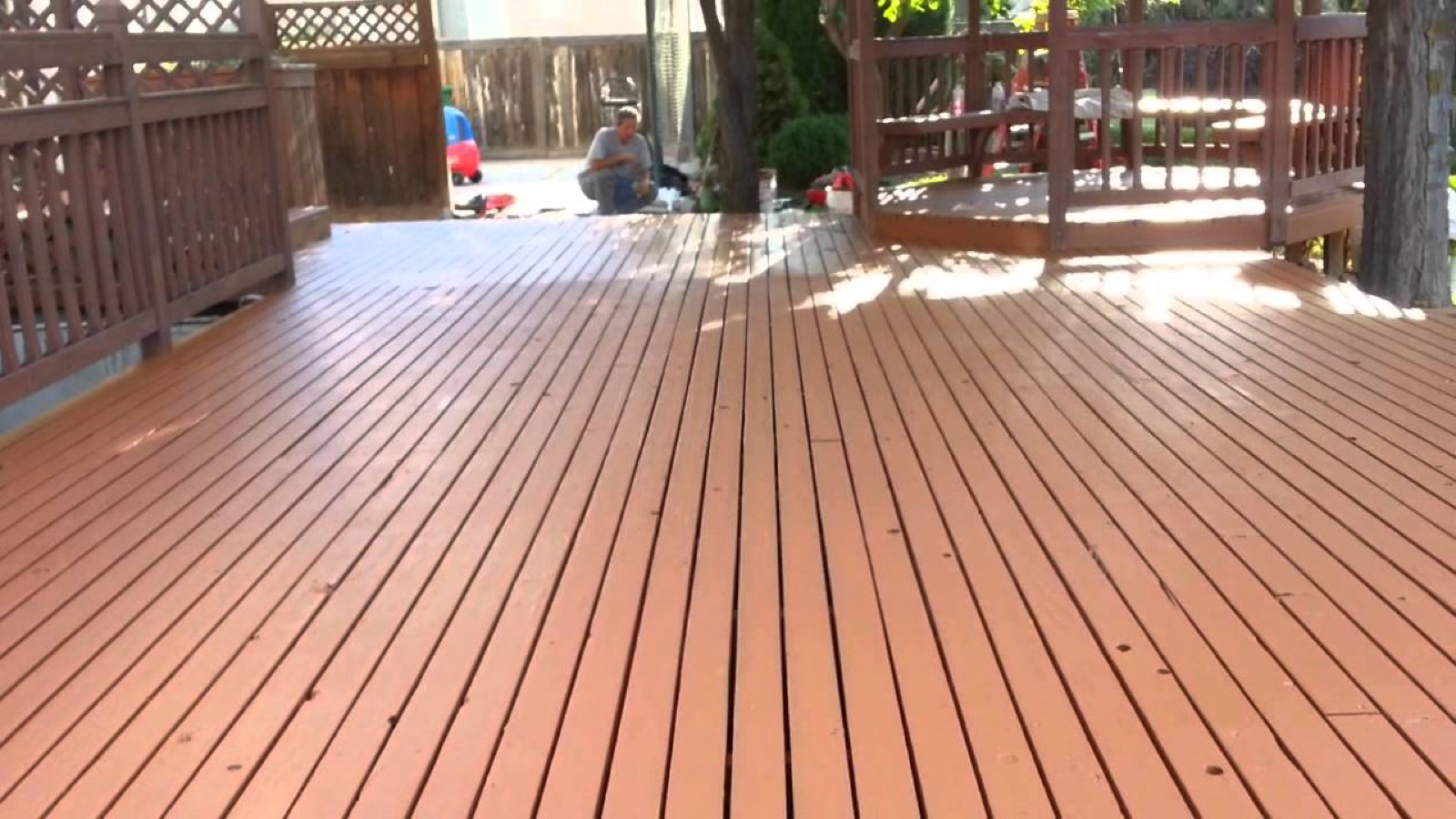
A renewed surface across a large outdoor space
This archive image shows the finished appearance homeowners often want when an older wood deck has become faded or inconsistent. The broad surface reads as one connected outdoor area because the board color and finish are visually uniform from edge to edge.
A photograph cannot establish the structural condition of a deck. Before recommending restoration or resurfacing, the visible boards, accessible framing, rails, stairs and connections need to be reviewed. The goal is to select the smallest responsible scope—not cover problems that require repair or replacement.
Restoration, resurfacing or replacement?
- Restoration keeps suitable boards and improves them through cleaning, preparation and a protective finish
- Resurfacing removes worn deck boards and installs a new walking surface over framing approved for reuse
- Repair addresses limited damaged components when the rest of the deck remains serviceable
- Replacement is appropriate when deterioration, movement or incompatible framing makes reuse impractical
- Railings, stairs, fascia and trim should be evaluated with the walking surface
What a useful deck evaluation should cover
The estimate should separate appearance concerns from structural concerns. Fading, peeling finish and surface checking may call for a different response than soft wood, loose guards, failing fasteners or movement in the frame.
If the deck is a candidate for resurfacing, material selection should account for joist spacing, ventilation, flashing, fastening requirements and the condition of every component that will remain. Hidden conditions are reviewed again after old boards are removed.
Questions to include in your estimate
- How will people move between the house, deck and yard?
- Which features are essential and which are optional?
- Should the estimate compare wood, composite or both?
- Are access, drainage, grade, setbacks or existing structures likely to affect the layout?
- Which permit, HOA or utility reviews may apply to the property?
Frequently asked questions
What is the difference between restoration and resurfacing?
Restoration keeps suitable deck boards and renews their finish. Resurfacing replaces the walking surface while retaining framing that has been evaluated and approved for reuse.
Can every wood deck be resurfaced?
No. Framing condition, layout, connections and compatibility with the selected surface determine whether resurfacing is responsible.
Can resurfacing include new railings?
Yes. Railings, fascia and stair surfaces can be included when the condition and finished design call for a coordinated update.